
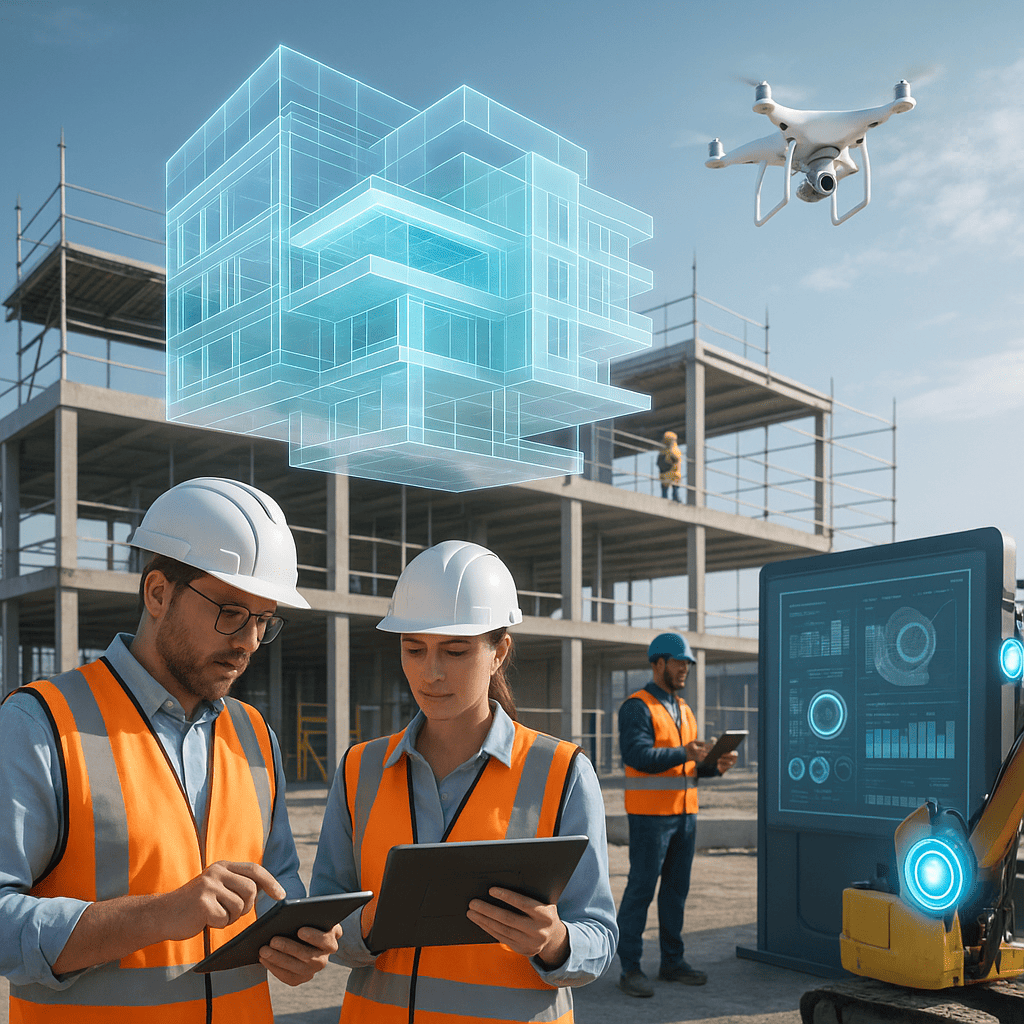
The construction industry is changing faster than ever. Today’s clients expect faster delivery, improved quality, transparency, and long-term value. To meet these expectations, construction companies, especially those providing turnkey solutions, are adopting advanced technologies that improve planning, design, execution, and monitoring.
From digital design systems to smart tracking tools and IoT-enabled buildings, technology has become the backbone of modern turnkey construction. Companies like Chameza Projects now rely on these innovations to deliver reliable, cost-effective, and future-ready infrastructure.
In this blog, we explore how smart tools and digital technologies are transforming turnkey projects and reshaping the future of construction.
1. Digital Transformation in Turnkey Construction
Traditional construction involves multiple contractors, scattered communication, and manual workflows. This often leads to delays, cost overruns, and errors. Turnkey projects, on the other hand, offer a streamlined solution, where design, engineering, and execution come under a single team. But technology is what makes the turnkey model truly efficient.
Key advantages of digital transformation:
- Faster project planning
- Accurate execution and quality control
- Real-time monitoring
- Enhanced safety and compliance
- Reduced dependency on manual labour
- Better client communication and transparency
Technology bridges the gap between design and onsite execution while helping teams work smarter, not harder.
2. Building Information Modeling (BIM): A Game-Changer in Design & Planning
Building Information Modeling (BIM) is one of the most revolutionary tools in construction today. BIM allows engineers, architects, and contractors to create 3D digital models of buildings with detailed data on materials, structure, utilities, and performance.
How BIM is transforming turnkey projects:
✔ Accurate Design Visualization
Clients can see exactly how their building will look and function long before construction begins.
✔ Fewer Errors & Rework
Clash detection helps identify MEP (mechanical, electrical, plumbing) conflicts early, saving time and money.
✔ Better Coordination
All teams’ designers, engineers, and site managers access the same model, ensuring seamless teamwork.
✔ Cost and Time Optimization
BIM enables precise quantity estimation, scheduling, and resource planning. BIM is not just a design tool; it provides a full lifecycle view of the project, making turnkey execution faster, smoother, and more predictable.
3. Project Tracking Tools: Improving Transparency & Accountability
Turnkey projects involve multiple tasks running simultaneously, procurement, civil work, installation, inspection, safety compliance, and more. Digital project tracking tools help construction companies manage everything in real-time.
Popular tracking technologies used today include:
- Cloud-based project management software
- Mobile site reporting apps
- GPS-enabled equipment tracking
- Digital dashboards for progress updates
- Time-lapse monitoring cameras
Benefits of turnkey construction:
✔ Real-Time Visibility
Clients and project managers can monitor progress from anywhere.
✔ Faster Decision Making
Instant updates help teams resolve issues before they become major delays.
✔ Improved Quality Control
Digital checklists and data logs ensure every stage meets compliance standards.
✔ Transparent Communication
Clients receive regular automated reports, enhancing trust and clarity.
Digital tracking tools make turnkey delivery more reliable and predictable, two factors that clients value the most.
4. IoT & Smart Building Integrations: Preparing Projects for the Future
Modern buildings are no longer just concrete structures; they are smart systems designed to improve user comfort, energy efficiency, and safety. IoT (Internet of Things) plays a major role in this transformation.
How IoT is used in turnkey construction:
✔ Smart Sensors for Energy Management
Sensors installed in HVAC, lighting, and electrical systems help in reducing wastage and optimizing energy use.
✔ Safety & Security Automation
IoT-enabled fire alarms, CCTV, access control, and emergency systems enhance building safety.
✔ Structural Health Monitoring
Real-time sensors track vibration, stress, temperature, and moisture, preventing faults and ensuring long-term durability.
✔ Environmental Control Systems
Smart labs, hospitals, and industrial facilities rely on IoT for maintaining the required air quality, airflow, and temperature.
✔ Predictive Maintenance
IoT tools predict failures before they happen, reducing downtime and repair costs. Integrating IoT makes infrastructure more intelligent, efficient, and future-ready, helping turnkey projects deliver long-term value.
5. Drones & Onsite Technology: Supporting Efficient Execution
Drones and onsite digital tools are now widely used across construction sites to simplify surveying, tracking, and inspection.
Key applications include:
✔ Drone Site Surveys
Aerial mapping creates highly accurate site models within hours, replacing manual surveys.
✔ Progress Photography & Reporting
Drone footage helps monitor large sites, document progress, and maintain project transparency.
✔ 3D Scanning & Laser Measurement
LiDAR and laser tools ensure precise measurements, essential for high-quality turnkey execution.
✔ Safety Audits
On-site digital safety checklists reduce human error and ensure compliance. By integrating technology onsite, construction teams work more safely, more accurately, and more efficiently.
6. Automation & Prefabrication: Faster, Safer, and Higher Quality
Turnkey projects demand speed and consistency. Automation and prefabrication technologies support these needs by manufacturing key building components in controlled environments.
Benefits of prefabrication in turnkey construction:
- Faster installation
- Reduced labour dependency
- Superior quality due to controlled manufacturing
- Reduced material waste
- Lower onsite risks
Prefabricated panels, steel structures, MEP assemblies, and lab/hospital modules significantly accelerate the turnkey delivery timeline.
7. Digital Twins: The Future of Project Lifecycle Management
A digital twin is a virtual replica of a physical building. Once construction is complete, digital twins help in operations, maintenance, and performance analytics.
Benefits include:
- Smart facility management
- Predictive maintenance
- Energy consumption insights
- Real-time system monitoring
- Improved renovation planning
For clients, digital twins offer unmatched control over their assets long after the handover.
Conclusion: Technology is Shaping the Future of Turnkey Construction
Turnkey construction is evolving rapidly, and technology is at the heart of this transformation. From BIM-guided design to IoT-powered building systems and real-time project tracking, smart tools make projects more efficient, transparent, safe, and cost-effective.
Companies like Chameza Projects that embrace digital innovation stand out by delivering higher quality, faster timelines, and future-ready infrastructure. As clients demand smarter, sustainable, and more reliable buildings, technology integration will continue to redefine how turnkey projects are planned, managed, and delivered.
