
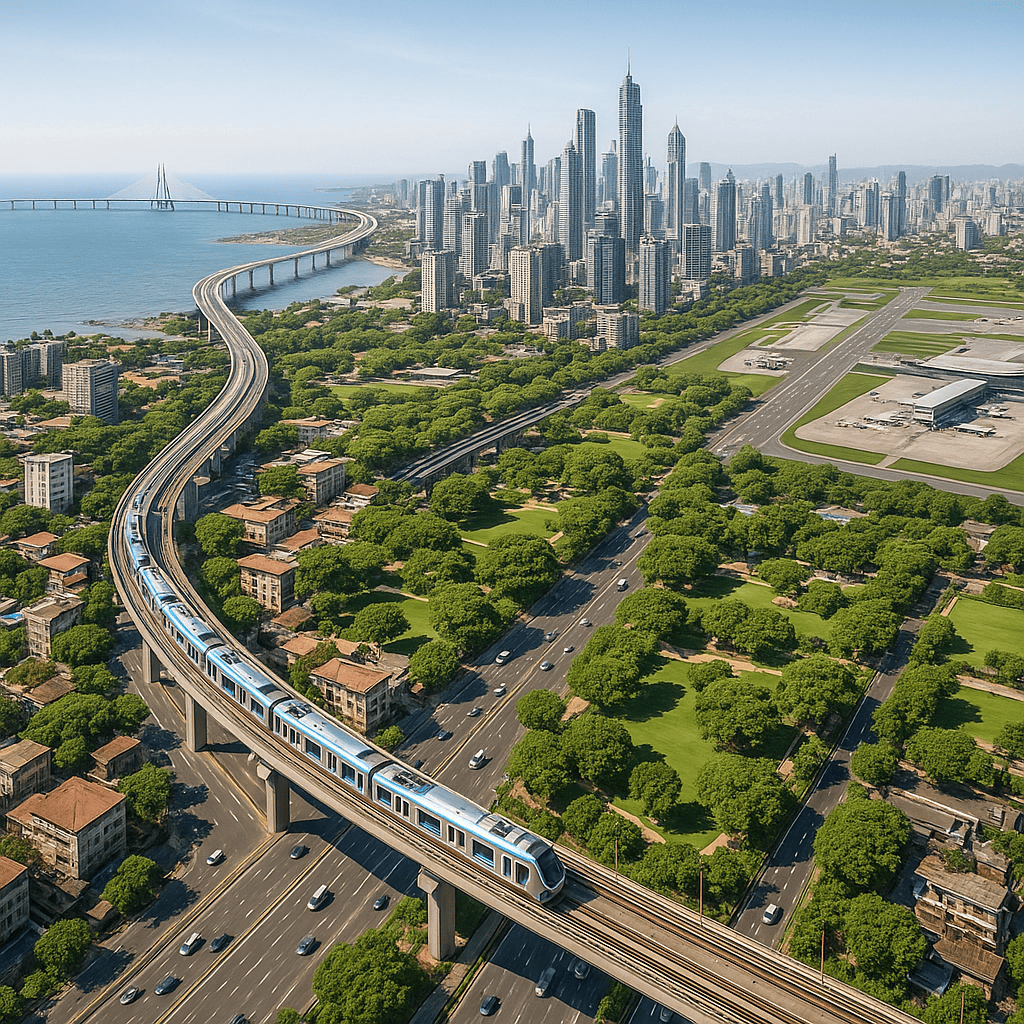
Mumbai, India’s financial powerhouse and one of the world’s fastest-growing megacities, is always evolving. From sky-scraping towers to state-of-the-art transport networks, the city’s infrastructure landscape is rapidly transforming to meet the needs of its booming population and economy. As we move through 2025 into 2026, Mumbai is poised for a new wave of projects that will reshape how people live, work, and move across the city. Let’s explore the key developments that promise to redefine Mumbai’s future.
1. Metro Expansion: Connecting the City Like Never Before
One of the most transformative developments in Mumbai’s infrastructure landscape is the expansion of the metro network. With multiple metro lines under construction and nearing completion, the city’s public transport framework is set to become more efficient, interconnected, and commuter-friendly. The highly anticipated Metro Line 3 (Colaba–Bandra–SEEPZ), billed as the longest underground metro corridor in India, has been a game-changer for reducing travel time across South and Central Mumbai. By 2025–26, more sections of this line are expected to open, bringing major hubs like Bandra Kurla Complex (BKC), Mahalaxmi, and Colaba closer to residents across the city. In addition to this, Metro Line 2A (Dahisar East–Andheri East) and Line 7 (Dahisar East–Ghatkopar) are also progressing rapidly. These lines will unlock direct east-west connectivity for commuters, easing congestion on central roads and suburban railways. The ripple effect of better connectivity will be felt across the real estate market, local businesses, and daily commuter lifestyles.
2. Coastal Road Phase II and Sea Links: Faster Commutes
Mumbai’s iconic coastal landscape is getting a futuristic upgrade with the Mumbai Coastal Road Project. Phase I, already a visual and functional landmark, has significantly cut travel times between South and North Mumbai. Looking ahead to 2025–26, Phase II is expected to progress further, extending connectivity to key junctions and promising smoother traffic flow. Alongside, ongoing work on new sea links, including the Mumbai–Vallabhbhai Patel Sea Link (formerly known as the JVLR–MTHL Link), will bolster connectivity corridors between the eastern and western parts of the metropolis. These projects aim to not only decongest arterial roads but also promote economic activity by improving access to ports, business districts, and peripheral industrial zones.
3. Suburban Rail Modernisation: Faster & Smarter Local Trains
Mumbai’s local trains are the city’s lifeline, carrying millions of commuters every day. To enhance this backbone of urban transport, the Suburban Rail Modernisation Project is gaining momentum. One key aspect is the introduction of Modern Electric Multiple Units (MEMUs) and semi-high-speed rakes, which will replace older trains to offer better comfort, safety, and speed. Advanced signalling systems, automated train control, and upgraded station amenities are also being introduced to reduce delays and prevent overcrowding. The project also includes the expansion of foot overbridges, escalators, lifts, and seamless integration with metro and bus services, making intermodal travel smoother and more accessible for people of all ages.
4. Navi Mumbai International Airport = The Next Aviation Hub
One of the most monumental infrastructure projects in the region is the Navi Mumbai International Airport (NMIA). As Mumbai’s second major airport, NMIA is designed to ease pressure from the existing Chhatrapati Shivaji Maharaj International Airport and serve as a gateway for international and domestic travel. By 2025–26, the airport’s first phase, including the main passenger terminal, runways, and support facilities, is expected to be operational. Once operational, this world-class airport will transform travel dynamics, enhance cargo operations, create thousands of jobs, and stimulate investment in hospitality, logistics, and real estate across Navi Mumbai and Greater Mumbai.
5. Smart City Initiatives: Digital, Green & Sustainable
Mumbai’s urban growth is not just about concrete and transport; it’s also about intelligent urban solutions that make the city greener, safer, and more efficient. The Smart Cities Mission has catalysed several digital and sustainable innovations.
Over 2025–26, expect further rollout of:
- Smart Traffic Management Systems: AI-powered traffic optimisation using real-time data to reduce congestion.
- Waste-to-Energy Facilities: Converting municipal waste into clean energy, helping reduce landfill burden while generating electricity.
- Public Wi-Fi Zones: High-speed connectivity in key urban nodes, transport hubs, and commercial districts.
-
Green Public Spaces: Expansion of pocket parks, linear parks along water bodies, and pedestrian-friendly public areas.
These initiatives will improve the quality of life while making Mumbai a more climate-resilient city.
6. Affordable & Sustainable Housing Projects
With rapid urbanisation, affordable housing remains a key priority. The Government of Maharashtra, in partnership with private developers under various schemes, has been accelerating the construction of affordable and transit-oriented housing projects around transport corridors like metro lines and transport hubs. By improving access to mass transit and reducing commute times, these developments aim to balance housing demand, reduce urban sprawl, and support inclusive growth.
7. Port and Logistics Upgrades
Mumbai’s status as a commercial and maritime hub is reinforced by ongoing upgrades to its ports and logistics infrastructure. The Jawaharlal Nehru Port Trust (JNPT) and other facilities are modernising container terminals, digitising customs processes, and expanding cargo handling capacities. These upgrades will improve global trade connectivity, reduce dwell times for cargo, and attract investment in warehousing, cold chain facilities, and multimodal logistics parks across the state.
8. Water & Sewage Infrastructure
An often-overlooked but critical part of urban infrastructure is water supply and sanitation. As population density rises, upgrades to Mumbai’s water treatment, distribution networks, and sewage systems are essential. Projects aimed at reducing water loss through leakages, expanding sewage treatment plants, and reutilising treated water for industrial and non-potable purposes are underway. These initiatives support not just public health, but also environmental sustainability and resilience against climate challenges like floods and droughts.
9. Urban Mobility & Last-Mile Connectivity
Infrastructure isn’t complete without addressing how people move within their neighbourhoods, the last mile. Over 2025–26, Mumbai plans to enhance:
- Bus Rapid Transit Systems (BRTS) in key corridors
- Electric buses and shared mobility solutions
- Bicycle lanes and pedestrian walkways
-
Micro-mobility integrations (e-scooters, e-bikes at transit hubs)
These efforts will make daily commutes not only eco-friendly but also more equitable and seamless.
10. Future-Ready Tech Integration
Looking beyond physical infrastructure, Mumbai is also embracing future-ready technologies. 5G rollout, IoT deployment for utilities monitoring, digital urban dashboards, and integrated payment systems for transit and utilities are expected to become more widespread in 2025–26. This digital backbone will enable better data-driven planning, emergency response, and citizen engagement, making the city smarter, safer, and more responsive to residents’ needs.
Conclusion: A City in Motion
Mumbai’s journey from a bustling port town to a global megacity continues with remarkable momentum. The infrastructure projects unfolding through 2025–26, spanning transport, housing, technology, sustainability, and commerce, reflect a strategic vision to balance growth with quality of life. For residents, commuters, businesses, and visitors alike, these developments promise improved connectivity, enhanced urban experiences, and new opportunities. As the city continues to evolve, one thing remains clear: Mumbai’s infrastructure growth isn’t just about building roads and railways; it’s about shaping a future ready for the aspirations of millions.
