
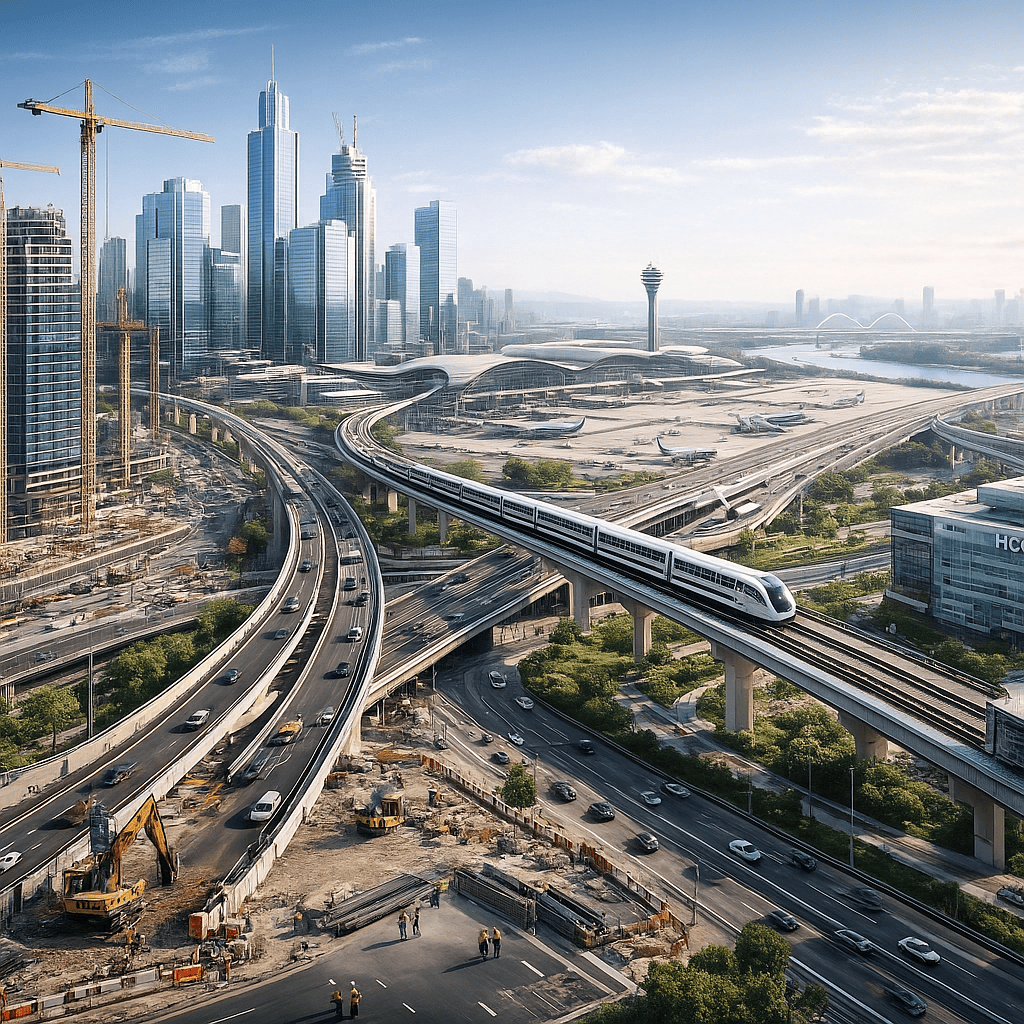
Commercial and public infrastructure projects play a crucial role in shaping economies, enhancing the quality of life, and fostering long-term development. From office complexes and shopping centers to airports, hospitals, roads, and public utilities, these projects form the physical foundation on which communities function and grow. As cities expand and populations increase, the demand for well-planned, durable, and sustainable infrastructure has never been greater.
This article examines the significance, various types, key stakeholders, challenges, and emerging trends in commercial and public infrastructure projects, underscoring their crucial role in driving national and regional development.
Understanding Commercial & Public Infrastructure Projects
Commercial infrastructure projects are developments primarily designed for business and economic activities. These include office buildings, industrial parks, warehouses, hotels, malls, data centers, and commercial complexes. Their main objective is to support trade, services, manufacturing, and employment generation.
Public infrastructure projects, on the other hand, are developed to serve the general public and are often funded or supported by government bodies. Examples include roads, bridges, railways, airports, seaports, water supply systems, sewage treatment plants, schools, universities, hospitals, and public housing. These projects aim to provide essential services, ensure safety, and promote social welfare.
Together, commercial and public infrastructure projects create an interconnected ecosystem that drives economic stability and social development.
Importance of Infrastructure Development
1. Economic Growth
Infrastructure is a key driver of economic growth. Commercial projects attract investments, create jobs, and stimulate business activities. Public infrastructure improves connectivity, reduces transportation costs, and enables smoother movement of goods and people. Strong infrastructure directly enhances productivity and competitiveness.
2. Improved Quality of Life
Public infrastructure, such as hospitals, schools, clean water systems, and transportation networks, significantly improves living standards. Reliable infrastructure ensures access to essential services, reduces daily hardships, and promotes overall well-being.
3. Urbanization and Smart Cities
As urban populations grow, well-planned infrastructure becomes critical. Commercial and public projects support organized urbanization, reduce congestion, and enable the development of smart cities with efficient energy use, digital connectivity, and sustainable design.
4. Long-Term Sustainability
Modern infrastructure projects increasingly focus on sustainability. Energy-efficient buildings, renewable energy integration, water conservation systems, and eco-friendly materials help reduce environmental impact while ensuring long-term operational efficiency.
Types of Commercial Infrastructure Projects
Office & Corporate Buildings
These projects house corporate operations, startups, and service industries. Modern office infrastructure focuses on flexible layouts, energy efficiency, digital connectivity, and employee well-being.
Industrial & Manufacturing Facilities
Factories, industrial sheds, logistics hubs, and warehouses form the backbone of production and supply chains. These projects require strong structural design, safety compliance, and efficient workflow planning.
Retail & Hospitality Projects
Shopping malls, hotels, convention centers, and entertainment complexes fall under this category. Design aesthetics, customer experience, and accessibility are key priorities in such developments.
Data Centers & Technology Parks
With the rise of digital transformation, data centers and IT parks have become critical commercial infrastructure. These facilities demand advanced power backup systems, cooling solutions, and high-security standards.
Types of Public Infrastructure Projects
Transportation Infrastructure
Roads, highways, metro systems, railways, airports, and ports enable mobility and trade. Efficient transport infrastructure reduces travel time, lowers logistics costs, and boosts economic integration.
Healthcare Infrastructure
Hospitals, clinics, diagnostic centers, and public health facilities ensure access to medical care. Well-designed healthcare infrastructure improves patient outcomes and supports emergency response systems.
Educational Infrastructure
Schools, colleges, universities, and research institutions contribute to human capital development. Quality educational infrastructure supports learning, innovation, and skill development.
Utilities & Public Services
Water supply systems, sewage treatment plants, power grids, waste management facilities, and communication networks are essential for daily life and environmental protection.
Key Stakeholders Involved
Commercial and public infrastructure projects involve multiple stakeholders working together:
- Government Authorities – Planning, funding, regulation, and approvals
- Private Developers & Investors – Financing and execution of commercial projects
- Architects & Engineers – Design, planning, and technical expertise
- Contractors & Fabricators – Construction, fabrication, and installation
- Consultants & Project Managers – Coordination, timelines, and cost control
- End Users & Communities – Beneficiaries and users of the infrastructure
Effective collaboration among these stakeholders is essential for successful project delivery.
Challenges in Infrastructure Projects
Despite their importance, commercial and public infrastructure projects face several challenges:
Budget & Cost Overruns
Rising material costs, design changes, and delays can increase project expenses. Proper planning and financial management are crucial to control costs.
Regulatory & Approval Delays
Multiple approvals, land acquisition issues, and compliance requirements can slow down projects, especially in public infrastructure development.
Time Management
Large-scale projects often face delays due to labor shortages, weather conditions, or supply chain disruptions. Strong project management helps minimize risks.
Sustainability & Environmental Impact
Balancing development with environmental responsibility is a growing challenge. Projects must comply with environmental regulations and adopt green practices.
Future Trends in Commercial & Public Infrastructure
Smart & Digital Infrastructure
The integration of IoT, automation, and digital monitoring systems is transforming infrastructure management. Smart buildings, intelligent traffic systems, and digital utilities improve efficiency and safety.
Green & Sustainable Construction
Eco-friendly materials, renewable energy, green certifications, and low-carbon construction methods are becoming standard in modern projects.
Public-Private Partnerships (PPP)
PPP models are increasingly used to fund and execute large infrastructure projects by combining public oversight with private sector efficiency.
Modular & Prefabricated Construction
Prefabrication and modular construction techniques reduce construction time, improve quality control, and minimize waste.
Conclusion
Commercial and public infrastructure projects are the backbone of economic development and social progress. They support businesses, connect communities, and provide essential services that improve everyday life. As technology advances and sustainability becomes a priority, infrastructure development is evolving to meet modern demands.
Strategic planning, skilled execution, and collaborative partnerships are key to delivering successful infrastructure projects. By investing in resilient, efficient, and sustainable commercial and public infrastructure, societies can ensure long-term growth, stability, and prosperity for future generations.
